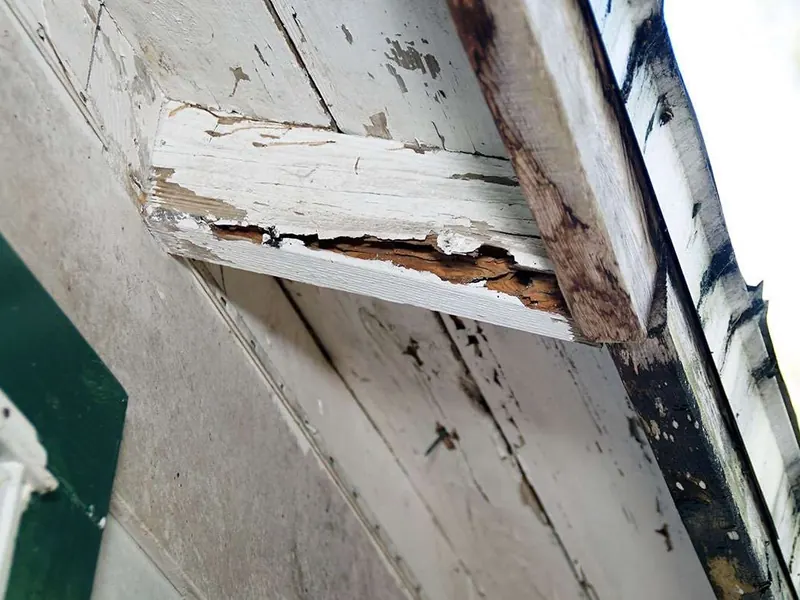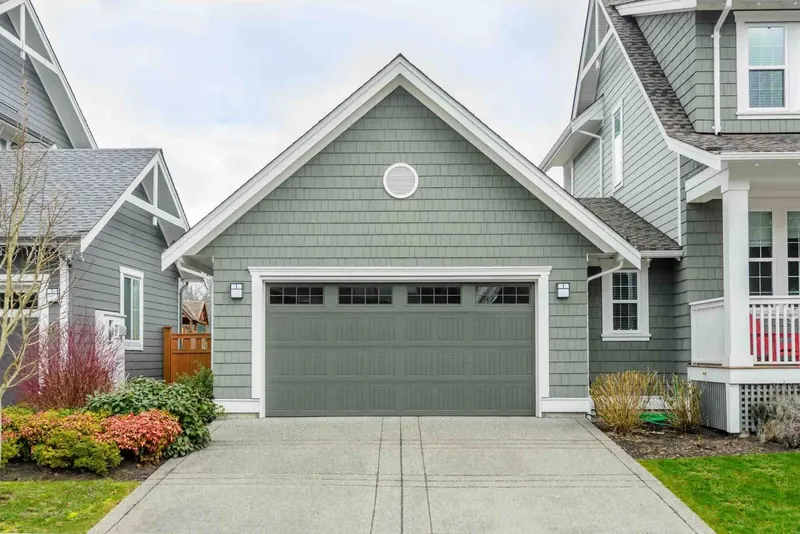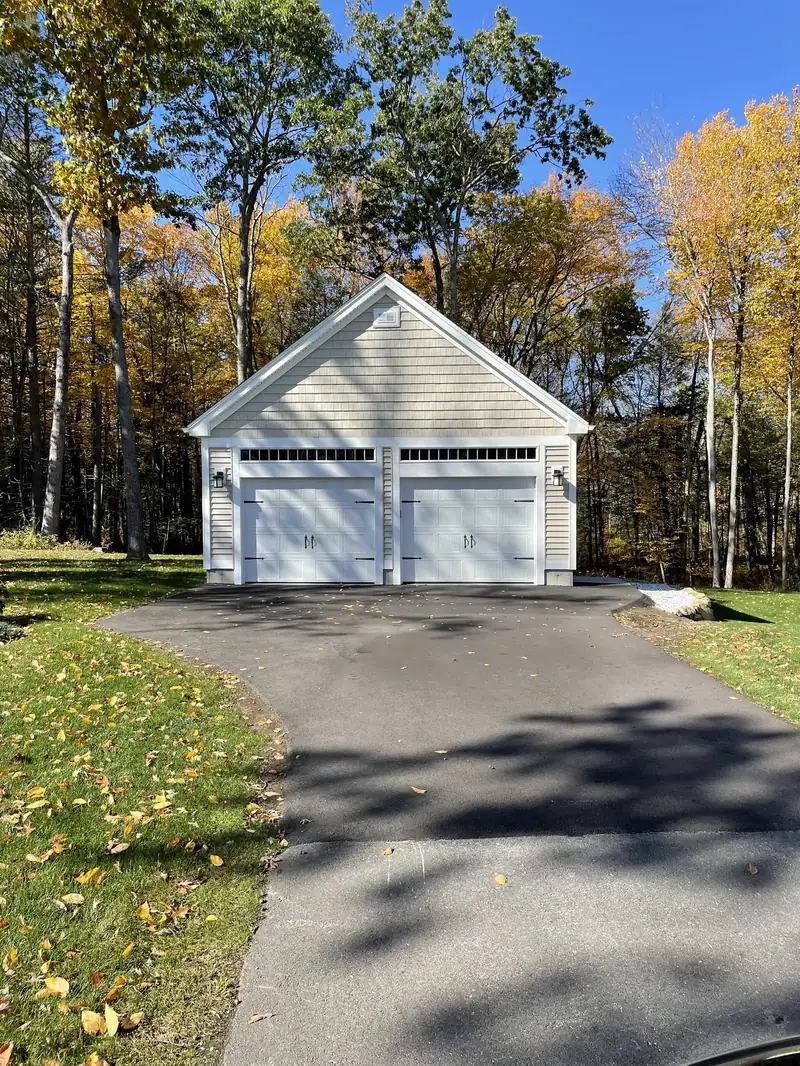
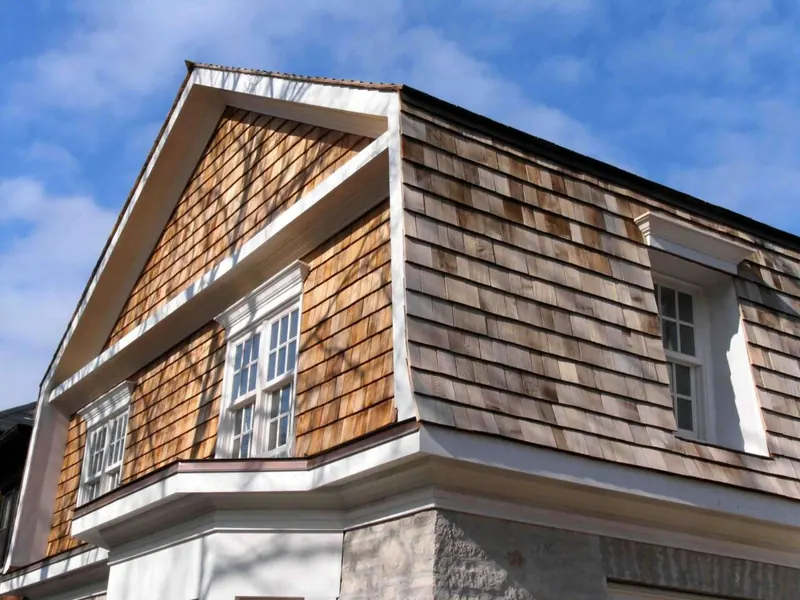
Wood rots when it stays wet. Dry wood doesn't rot, even old wood. So preventing rot comes down to one job: get water off the house fast and don't let it sit in the wood.
Most of the rot we repair around Windham starts in the same handful of places. Here's the checklist we'd walk through on any house in Southern NH, and why each item matters.
Start with the gutters and where the downspouts dump
Clogged gutters overflow right at the fascia board and the top of the siding. That water soaks into the back of the trim, where you can't see it, and stays there. Around Windham, with all the oaks and pines, gutters can fill up in a single fall. Clean them after the leaves drop and again in late spring when the pollen and seed pods come down.
Then look at the downspouts. A downspout that empties at the foundation keeps the soil soaked next to the house, and that moisture wicks up into sills, bottom trim and the first course of siding. Add an extension or a splash block so the water lands at least a few feet out, on ground that slopes away from the house.
In winter, watch for ice dams. When snow melts on a warm roof and refreezes at the cold eave, the water backs up under the shingles and into the roof edge. Icicles hanging off packed gutters are the giveaway. The fix there is usually more attic insulation and better venting, which we'll get to.
Check the roof edges and the spot where a roof meets a wall
Two small pieces of metal stop a lot of rot.
The first is drip edge, the bent metal strip along the edges of the roof. It kicks water out past the fascia instead of letting it curl back onto the wood. Current code calls for it on shingle roofs, but plenty of older roofs around here were done without it. If you can see the bottom edge of the roof sheathing from a ladder, or the fascia is stained and soft, drip edge is the first thing to ask about.
The second is kick-out flashing. Think of a garage or porch roof that runs into the side of a two-story wall. Rain runs down that roof and along the wall, and at the bottom it pours straight down behind the siding. A kick-out is a small angled flashing at that bottom corner that throws the water into the gutter. Without one, the wall below that corner rots from the inside, sometimes for years before anyone notices. If you have a roof-to-wall corner and no kick-out, get one added. It's a small job that saves a big one.
Keep siding and trim up off the dirt and mulch
Wood that touches soil or mulch stays damp all the time. Mulch is the worst, because it holds water like a sponge and people keep adding to it every spring until it's piled up against the siding.
The building code uses 6 inches as the minimum gap between the ground and untreated wood siding and sheathing. That's a good rule for your whole house. Rake mulch back, keep soil graded down and away, and don't let shrubs grow into the walls. Plants against the siding hold moisture and block the sun that dries the wood after a storm.
Push a screwdriver into the bottom corner of a door trim or the lowest piece of corner board. If it sinks in with light pressure, that wood is already soft and the checklist below is about stopping the next spot, not this one.
Keep paint and caulk in good shape
Paint is the wood's raincoat. Once it cracks or peels, water gets into the grain and the paint around it starts lifting faster. Walk the house once a year, ideally in spring after the freeze and thaw cycles have done their worst. Look hardest at window sills, the bottoms of door casings, and any horizontal piece of trim where water can sit.
Caulk matters at the joints: where trim meets siding, around windows and doors, and at the top of window head casings. Old caulk shrinks and pulls away. Cut it out and recaulk with a good exterior sealant. Don't caulk the bottom edge of clapboards, though. Those laps need to drain, and sealing them traps water behind the siding.
When you replace trim, do it so it lasts
A lot of rot repairs fail because the new wood goes up the same way the old wood did. If we're putting back wood trim, we prime every side and every cut end before it's nailed up. The back and the end grain are where water gets in, and a board that's only painted on the face soaks it up like a straw.
For the spots that take the most abuse, we'd go with PVC trim (Azek is one example) instead of wood. Door and garage door casings, bottom trim boards, corner boards near the ground and window sills are all good candidates. PVC doesn't rot. It does need to be installed with room to move, since it expands and contracts with temperature more than wood, so it's not a straight swap for someone who hasn't worked with it.
And when rot shows up, find out why it happened before fixing it. Swapping a soft board without fixing the leak above it just means you'll replace it again. Our wood rot repair work always starts with checking behind the visible damage and tracing where the water came from.
Let the attic and crawlspace breathe
Rot isn't only an outside problem. Warm, damp air from the house rises into the attic, hits the cold roof sheathing in winter and condenses. Over a few seasons you get dark, stained sheathing and soft spots near the eaves. Go up with a flashlight on a cold day. Frost on the nails or the underside of the roof means moisture is getting up there and not getting out.
The fix is usually two parts. Seal the openings that let house air into the attic (around light fixtures, the attic hatch, plumbing stacks), and make sure the soffit vents aren't buried under insulation so air can flow in low and out at the ridge. Bathroom fans should vent outside, not into the attic.
Crawlspaces have the opposite problem in summer. Our humid July air hits the cool crawlspace and leaves moisture on the joists and sills. A vapor barrier over a dirt floor goes a long way. If the space smells musty or the wood feels damp, that's worth dealing with before it becomes a structural repair.
Decks and steps rot from the top down
On decks, the ledger board (where the deck attaches to the house) is the one that matters most. It needs proper flashing above it so water running down the wall doesn't get trapped between the ledger and the house. Rot there can let a deck pull away from the house, and that's a safety problem.
We also check the tops of joists (joist tape helps there), stair stringers where they meet the ground, and post bottoms sitting in dirt. Keep leaves and snow from piling up between boards, and don't let planters sit on the deck for years.
If your deck has soft spots, we'll tell you honestly whether a repair makes sense or whether the frame is too far gone. You can see the kind of work we do on our decks and porches page.
If you want a second set of eyes on your trim, roof edges or deck before small rot turns into a big repair, call or text us at 781-248-5017 and we'll come take a look.