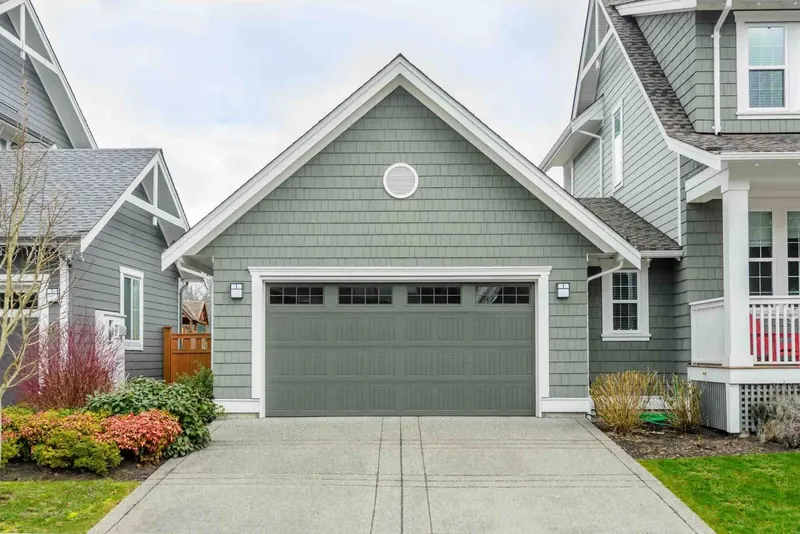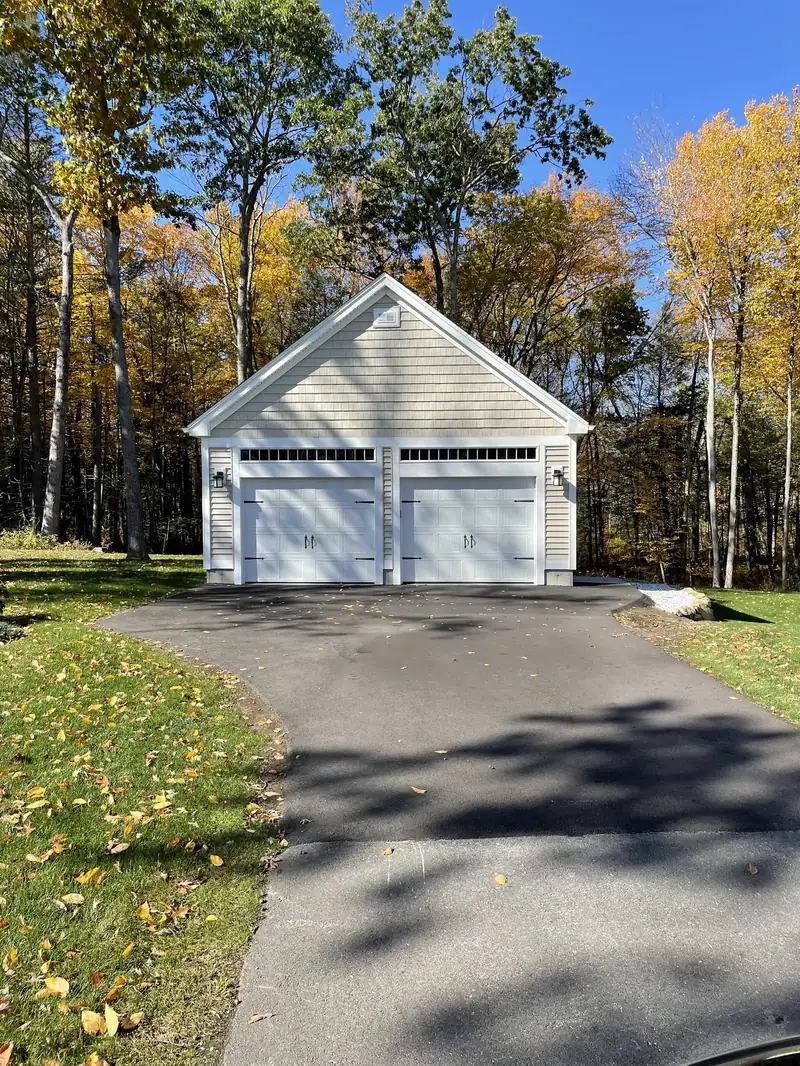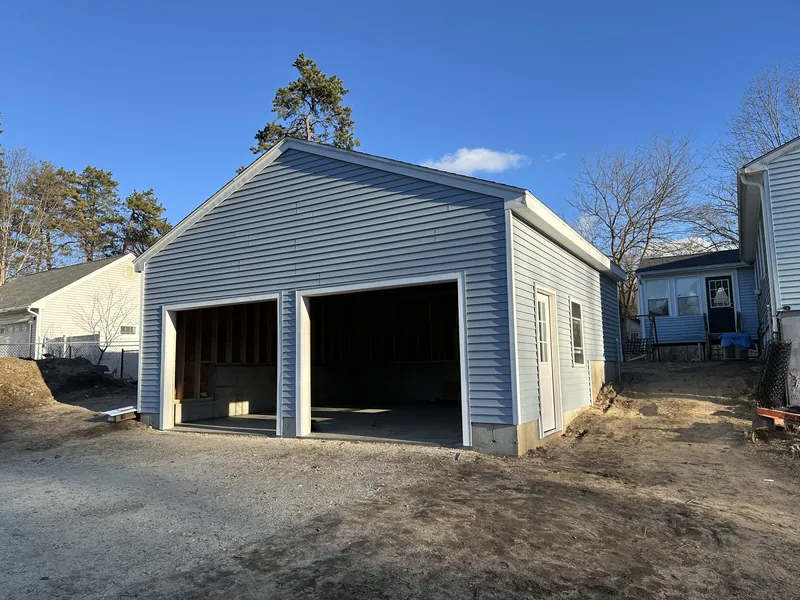
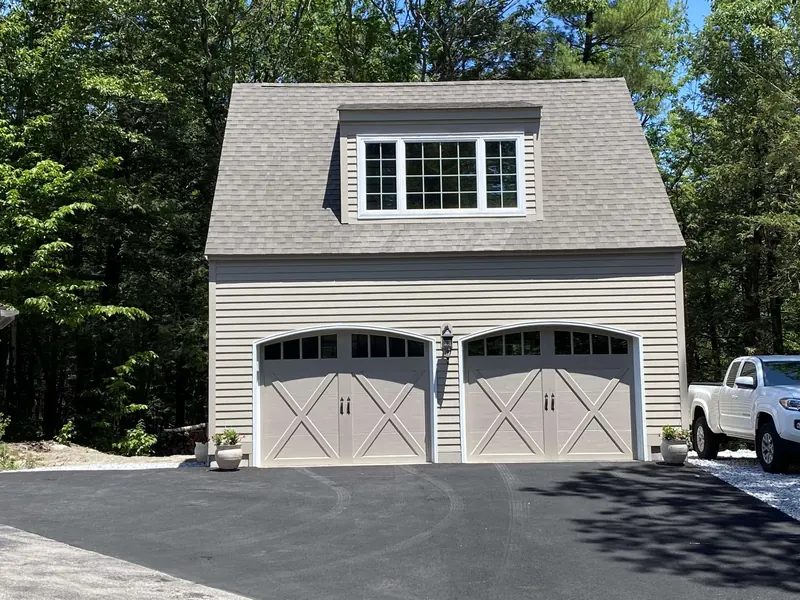
A garage works when you can pull the car in, walk all the way around it, find the snow shovel and still have somewhere to fix a bike. Most don't. Stuff creeps in from the walls until the car lives in the driveway.
The fix is planning the inside as carefully as the outside, ideally before the walls are closed up. These are the things we think about when we build or remodel a garage in Windham and around Southern NH.
Plan the walls before you buy shelves
Split the garage into zones. The car bays stay clear, with about three feet to walk around each car. Long walls hold storage. One end, usually the back or the side with a window, holds the bench.
Get things off the floor. Anything on the floor collects slush and salt in winter, and it's in the way every time you sweep. A wall track or slatwall system lets you hang shovels, rakes, bikes and ladders and move the hooks around as your stuff changes. Cabinets up off the floor on legs or wall-mounted keep paint and chemicals behind a door.
Overhead racks are great for seasonal stuff you touch twice a year, like the Christmas bins and the camping gear. Two cautions. Most garage ceilings are framed with roof trusses, and those aren't built to carry heavy storage unless they were designed for it, so ask before you hang a rack loaded with a few hundred pounds. And check where the door sits when it's open, along with the opener rail. A rack that blocks the door is a common and annoying mistake.
Give the workbench the good spot
Put the bench where there's natural light and a run of outlets. If the garage is 26 feet deep or more, the back wall in front of the cars works well. In a shallower garage, a side wall is better, so you're not squeezing past a bumper to get to your tools.
A bench about 24 inches deep holds a project without making you reach. Height is personal. Around 36 inches suits most people, but the right height is roughly where your hands hang with your elbows bent. Build it solid and fasten it to the wall framing. A wobbly bench is useless for anything that takes force.
Outlets, circuits and lighting
Garages never have enough outlets. Along the bench, put them every couple of feet, 42 to 48 inches off the floor, so they sit above the bench top instead of behind it. Add one near each bay for a battery charger or a shop vac, and one on the ceiling above each door opener.
The electrical code requires GFCI protection on garage receptacles, and a dedicated 20 amp circuit for them. Beyond that, think ahead. An EV charger, a compressor or a table saw each want their own circuit, and some need 240 volts. If the garage has its own subpanel, leave room in it. Running wire is cheap with the walls open and expensive later.
For lighting, spread out several LED fixtures instead of putting one bright one in the center. One light casts your own shadow on whatever you're working on. A daylight-white color, around 4000 to 5000K, shows true colors for painting and repairs. Put a dedicated light over the bench.
Insulation, heat and windows
If you'll spend time out there in January, insulate the walls and ceiling and seal the gaps before you think about a heater. An uninsulated garage leaks heat as fast as you add it. A propane or gas unit heater warms a garage up fast for a Saturday project. A ductless mini-split keeps it at a steady 50 degrees all winter and cools it in July, which suits a workshop or a gym.
Windows make a garage feel like a room instead of a box. Put them high on the wall, above where cabinets and racks will go, so you get light without losing storage. Windows in the garage doors themselves add light too. South-facing windows bring in the most.
One thing about a heated garage: cars full of snow melt faster, so you get more water on the floor. Give it a way out and keep some air moving so the walls don't stay damp.
Floors that stand up to salt
Bare concrete soaks up water and road salt. Over a few winters of freeze and thaw, the surface starts to flake and pit, usually in the spot under each car where the slush drips off. Oil stains don't help.
A coating stops that. Epoxy or polyaspartic floors with a broadcast flake finish clean up with a squeegee and a mop, and the flake adds some grip so the floor isn't slick when it's wet. The prep decides how long it lasts. The concrete has to be ground clean so the coating bonds, and a new slab needs to cure, usually about a month, before it's coated. Skip the prep and the coating peels where the hot tires sit.
If you're not ready to coat the floor, at least put a containment mat under each car for the winter. It holds the meltwater and salt so you can push it out the door instead of letting it soak into the slab.
Keeping snowmelt and road salt under control
Anyone commuting from Windham down I-93 or along Route 111 comes home every winter evening with a car caked in brine. All of that ends up in the garage. A few things keep it from doing damage.
The slab should slope toward the big door so water heads out on its own. Keep a floor squeegee on the wall and use it. Put shelving on plastic feet or hang it, so the bottoms of wood shelves aren't sitting in salt water. A boot tray by the house door keeps the slush on the garage side.
Watch the trim at the base of the garage doors. The wood jambs and the bottom of the trim stay wet with salty slush all winter, and it's one of the most common places for rot to start on a garage. Replacing them with PVC trim fixes it for good. If yours are already soft, our wood rot repair crew checks what's behind them, too.
Choosing garage doors and openers
An insulated steel door is worth it on any garage you heat or work in. Polyurethane foam insulates better than polystyrene panels and makes the door stiffer and quieter. Look at the bottom seal too. A good rubber seal keeps out drafts and mice.
For openers, a belt drive runs much quieter than a chain, which matters if there's a bedroom above or beside the garage. A wall-mounted opener sits beside the door instead of on the ceiling, which frees the space over the cars for storage or a lift. Battery backup is worth having, because the power goes out in ice storms, exactly when you don't want to lift a door by hand.
We build new garages and remodel old ones, including insulation, electrical upgrades, built-in cabinets, epoxy floors and climate control. See more on our garage page, or call or text us at 781-248-5017 and we'll come look at yours.