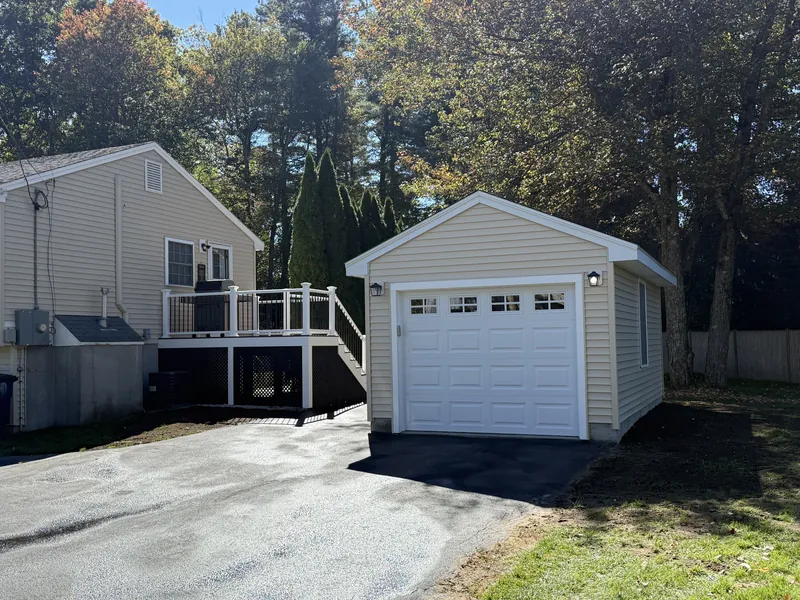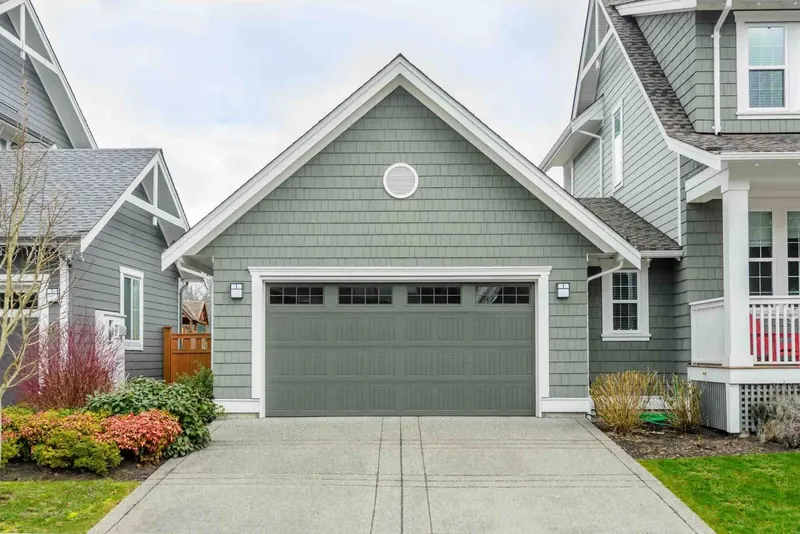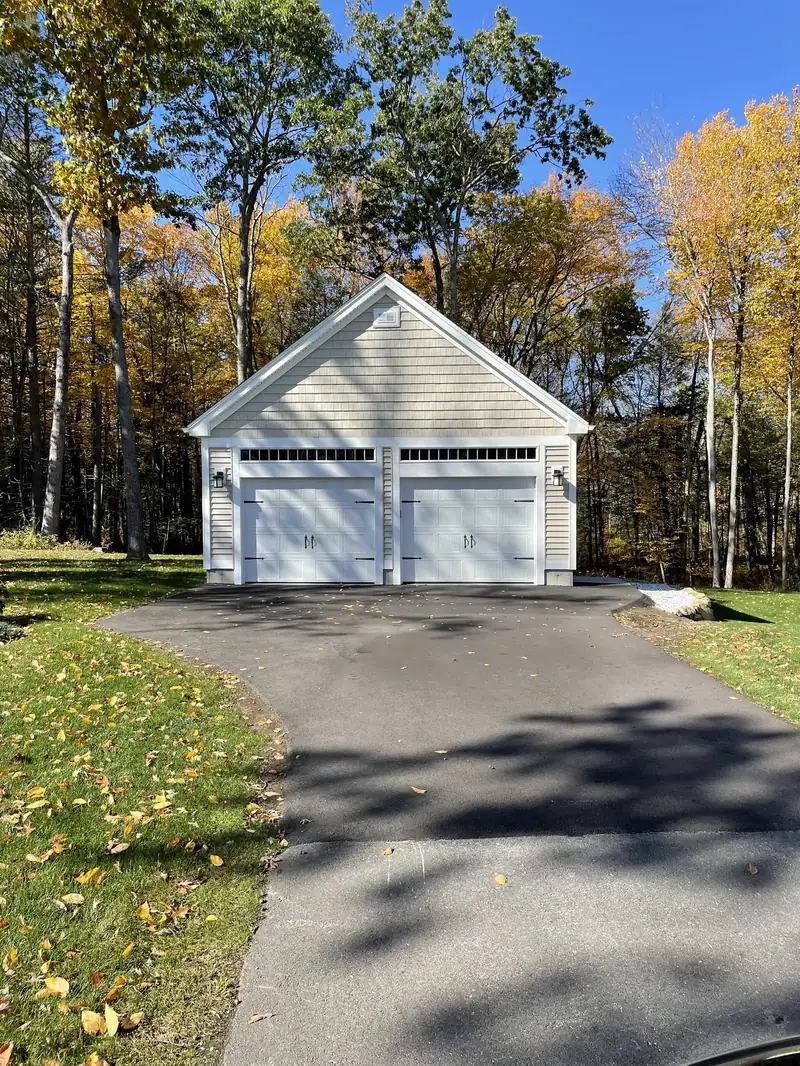
The contractor you hire matters more than the plan you start with. A good one will catch problems in the plan. A bad one will build a good plan badly. So it's worth an hour of checking before you sign anything.
Here's what we'd look at if we were hiring a builder for our own house in Windham, or anywhere across Southern NH and Northern MA.
New Hampshire doesn't license general contractors
Many people assume a contractor's license proves something. In New Hampshire, there isn't one. The state has no license or registration for general contractors, builders or remodelers. Anyone can print business cards.
The trades are different. Electricians and plumbers have to be licensed by the state, through the state licensing office, the OPLC. On a job that includes electrical or plumbing work, ask who's doing it and get their license numbers. You can look them up on the OPLC website.
Because there's no license to check, the rest of this list matters more in New Hampshire. Insurance, a written contract and a record of finished work are your real protection.
Massachusetts has more rules, and they protect you
If your house is over the line in Massachusetts, the state has two credentials to ask about.
The Construction Supervisor License (CSL) is for the person supervising structural work, like additions, new framing or anything that needs a building permit for structural changes. The Home Improvement Contractor (HIC) registration applies to contractors working on existing owner-occupied homes with one to four units. On a structural job at your home, you'd typically want to see both.
Massachusetts also limits deposits on home improvement contracts. Under state law, the deposit before work starts can't be more than one-third of the total contract price, or the actual cost of any special-order materials, whichever is greater. Massachusetts requires these contracts to be in writing, too. If a contractor working in Massachusetts asks for half up front on a standard job, that's a problem.
You can look up both the CSL and the HIC registration on the state's website. If you hire a contractor who isn't registered, you also lose access to the state's Home Improvement Contractor guaranty fund, which can help homeowners when a registered contractor doesn't finish or pay up.
Get the insurance certificate from the agent
Ask for proof of general liability insurance and workers' compensation. Liability covers damage to your house or your neighbor's. Workers' comp covers a crew member who gets hurt on your property. Without it, an injured worker can go after the homeowner.
Don't accept a photocopy the contractor hands you. Ask their insurance agent to send a certificate directly to you, with your name and address listed. It takes the agent a few minutes, and it proves the policy is active today. If a contractor says they don't need workers' comp because "everyone's a subcontractor", ask whether those subcontractors carry their own.
Put the scope, price and payments in writing
A written contract protects both sides. At a minimum it should say:
- Exactly what's being built or repaired, with drawings or a detailed description.
- Which materials and products are included, by name where it matters (window line, siding type, decking brand).
- What's not included. Painting, landscaping, dumpster fees and permit fees are common gaps.
- The price, and how changes will be priced and approved.
- A start date and a rough schedule.
- The payment schedule.
Tie payments to progress you can see. A typical setup is a deposit, then payments after milestones like foundation, framing and rough inspections, drywall, and a final payment after the final inspection and punch list. You should never be far ahead of the work. If the contractor walks away, you want to have paid for what's built, not for what's promised.
Hold the final payment until the town signs off and the punch list is done. It's the best way to get the last details finished.
Ask who pulls the permit
The contractor should pull the building permit in their name. That puts the responsibility for code compliance on them. If a contractor asks you to pull a homeowner's permit, it usually means they don't want to be on the hook with the town, and you'll be the one answering to the inspector.
Ask too how they handle inspections and what happens if one fails. A contractor who works in your town regularly will know how the building department runs and what the inspector tends to look for. We pull the permits on our jobs and build to the local code.
Find out how they communicate
Most frustration on construction jobs isn't about the work. It's about not knowing what's going on. Before you hire, ask:
- Who's my main contact, and who's on site day to day?
- How often will I hear from you, and how? Calls, texts or email?
- How quickly do you answer a question during the job?
- How do you handle a change I want halfway through?
Pay attention to how they respond during the estimate. If they're slow to call back and vague now, it won't get better once they have your deposit.
Check references and red flags
Read their reviews on Google and other sites, and look for detail. "Great job" tells you little. "They found rot behind the siding and showed us before fixing it" tells you a lot. Ask for a couple of references from jobs like yours and call them. Ask whether the job finished close to the price and how problems got handled. Look at photos of real finished projects. You can see ours on our work and read what clients say on our reviews page.
Walk away if you see any of these:
- A big cash deposit with nothing in writing.
- Pressure to sign today for a "special price".
- No proof of insurance.
- Suggestions to skip the permit.
- A price far lower than everyone else's with no clear reason. Something got left out.
- No physical address or a business that's hard to look up.
We've been building in Southern NH and Northern MA since 2015, and we're fully licensed and insured. If you're planning a project and want to talk it through, call or text us at 781-248-5017 for a free estimate.