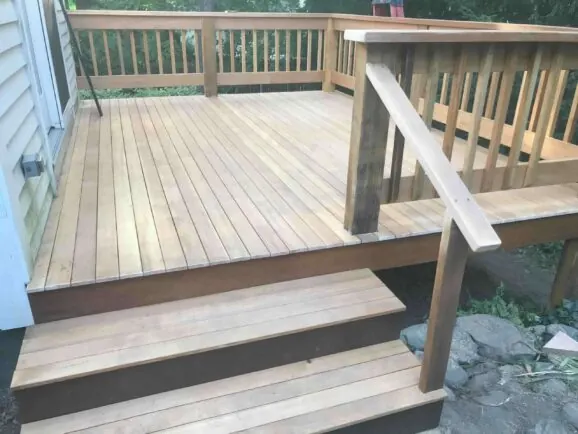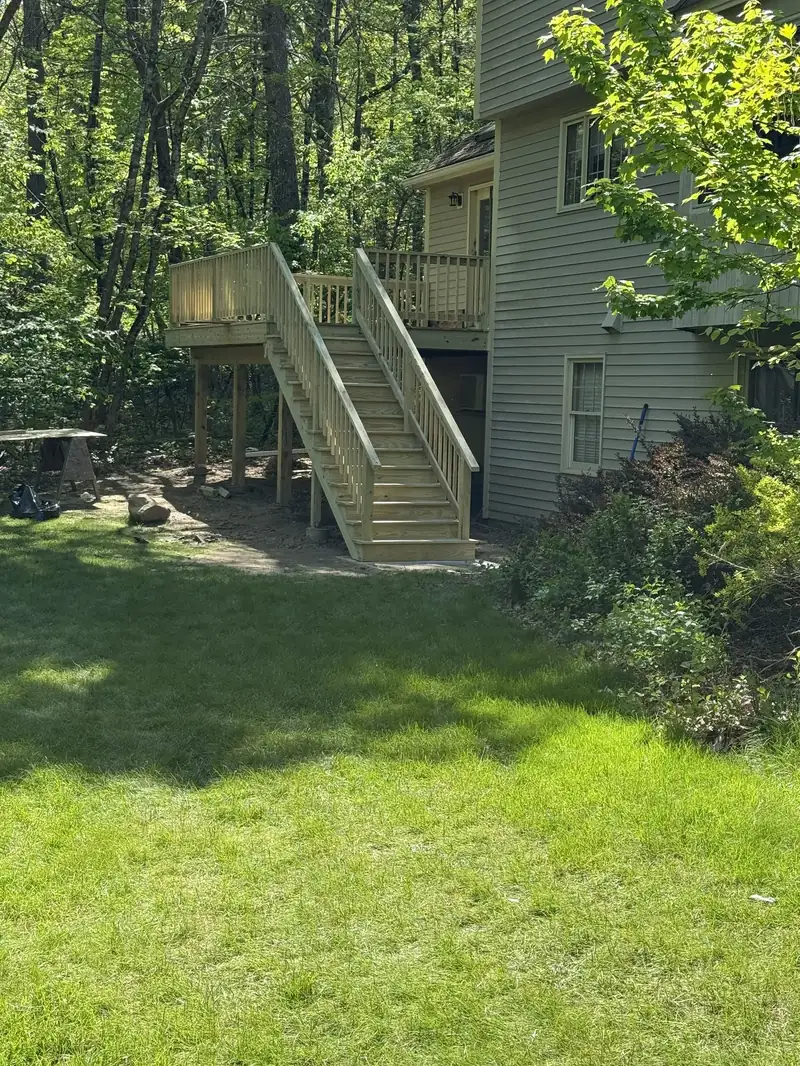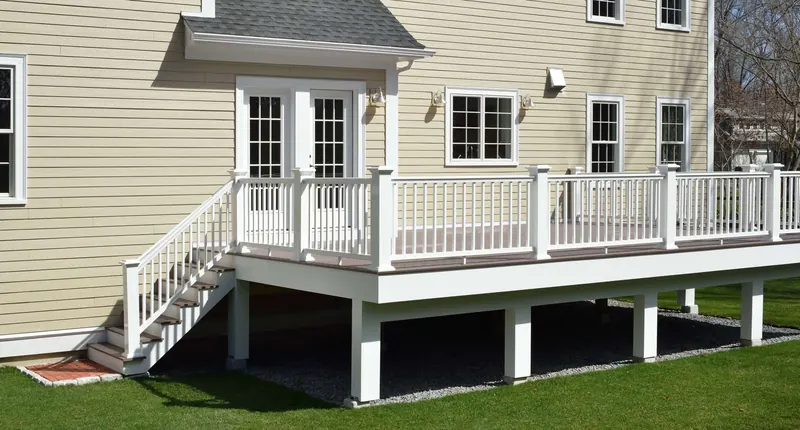
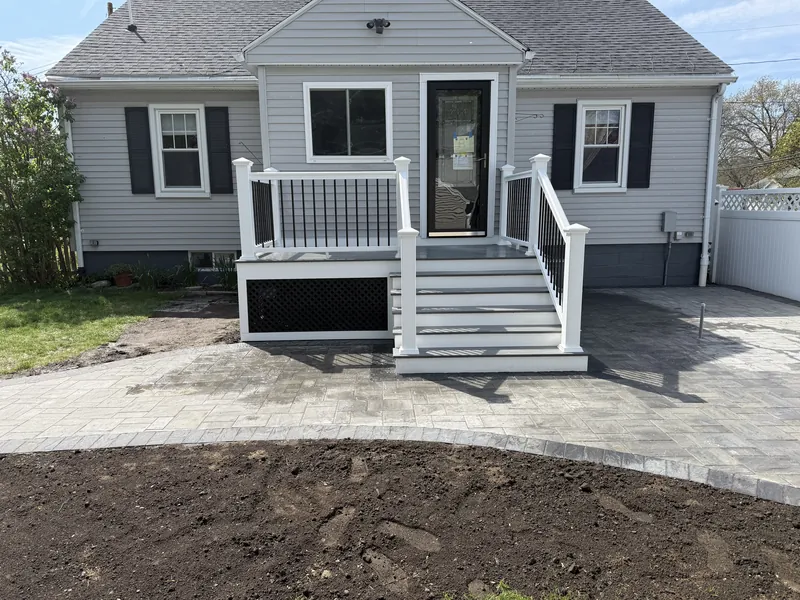
Composite decking is the right call for a lot of New Hampshire homes, but not all of them. It saves you from sanding and staining every few years. It also costs more up front, gets hot in full sun and still sits on a wood frame that needs the same care as any other deck.
We build decks in wood, composite and PVC, so we don't have a horse in this race. Here's how we talk it through with homeowners.
Composite, capped composite and PVC aren't the same thing
People use "composite" for three different products, and the differences matter.
Old-style composite is a blend of wood fiber and plastic with no protective shell. The first generation of it had real problems. The wood fiber soaked up water, grew mold and faded fast. If you've seen a gray, blotchy composite deck from the early 2000s, that's what you were looking at.
Capped composite has the same wood and plastic core, wrapped in a hard plastic shell on the exposed faces. The cap is what keeps out water and stains. Almost everything sold today is capped, and it's what most people mean now when they say composite.
PVC boards (Azek is one well-known example) have no wood fiber at all. They're lighter, they don't absorb water and they hold up well in damp, shady spots. They also cost more than capped composite, and they expand and contract more with temperature, so gapping at the ends has to be done right.
What composite does better than wood in our climate
The big win is upkeep. A pressure-treated deck in Southern NH needs cleaning and a fresh coat of stain every couple of years, more often on the sunny side of the house. Cedar looks great but asks for the same attention. Capped composite needs a wash in the spring and that's about it.
It also doesn't splinter, check or cup the way wood does after a few winters of freeze and thaw. Boards stay flat, and you won't have nail heads popping up in March. For a family with small kids or a dog, that alone makes it worth a look.
And color holds. Capped boards fade a little in the first months, then settle. Wood starts going gray the first summer unless you keep after it.
The downsides most sales sheets skip
Heat is the one people notice first. Composite and PVC get noticeably hotter than wood in direct afternoon sun, and darker colors get the hottest. On a south-facing deck in July, bare feet will tell you. Lighter colors help. So does shade from the house, a tree or a pergola.
Cost is the second. Composite boards cost more than pressure-treated, and the railing systems that go with them add more. Over 15 or 20 years you'll spend less on stain and labor, but you pay the difference on day one.
Scratches are the third. The cap is tough but not armor. Dragging a metal patio chair or a grill with no pads across it will leave a mark, and you can't sand it out like wood. Felt pads under furniture and a mat under the grill are worth the few minutes.
Some people also don't love the look up close. Even the better boards read as "not wood" to some eyes. Look at real samples outside in daylight before you decide, not a photo on a screen.
The frame under composite is still wood
This is the part people forget. Nearly every composite deck around here sits on pressure-treated posts, beams and joists. The boards on top won't rot, but the frame underneath can, and it's the frame that holds the deck up.
Composite also asks more of that frame. Every maker publishes a maximum joist spacing for its boards. It's often 16 inches on center for boards running straight across, and tighter (often 12 inches) when boards run on a diagonal or for stair treads. Go wider than the maker allows and the boards sag between joists over time, and you'll void the warranty.
So if you're putting composite on an old frame, have the frame checked first. The joists can be spaced at 24 inches for old wood decking, or have soft spots near the ledger. New boards on a tired frame is money spent on the wrong layer. We'd also put joist tape on the tops of the joists under composite. It keeps water from sitting in the screw holes and helps the frame last as long as the boards.
Hidden fasteners, snow and the details of living with it
Most capped composite and PVC can go down with hidden fasteners, clips that sit in a groove along the board edge so you don't see screw heads. It's a clean look, and we like it on most decks. Face screws with color-matched heads still have a place on stairs and picture-frame borders, where you want boards locked down tight.
Snow is easier on composite than people expect. Use a plastic shovel, push along the length of the boards rather than across them, and don't chip at ice with a metal edge. Most makers are fine with calcium chloride ice melt. Read the care guide for your brand before winter, because the rules differ and the warranty depends on them.
Leaving snow on the deck all winter is fine for the boards. The bigger question is the frame and whether it was built for our snow loads. That gets settled when the deck is designed, long before anyone picks a board color.
Ask for a full-size sample board and leave it on your existing deck or patio for a sunny afternoon. Stand on it barefoot and set a chair on it. You'll learn more in an hour than from any brochure.
When we'd recommend composite, and when we wouldn't
We'd steer you toward capped composite or PVC if you plan to stay in the house a long time, you don't want to stain every couple of years, or the deck is high off the ground and hard to reach for refinishing. PVC gets the nod for low decks close to the ground and shady, damp yards where mildew is a fight.
We'd lean toward pressure-treated if budget is tight, you plan to sell in a few years, or it's a utility deck off a back door that nobody spends much time on. Cedar is the pick when you want real wood and don't mind the upkeep.
And for most decks we build, the answer is a mix: a pressure-treated frame built right, with composite or PVC on top where people walk and touch. You can see some of that combination on our decks page and in our recent work.
If you're weighing composite against wood for your own deck, call or text us at 781-248-5017 and we'll bring samples and look at your yard with you.